Indian Tantric Western Contemporary
Collaboration with Joost van den Bergh
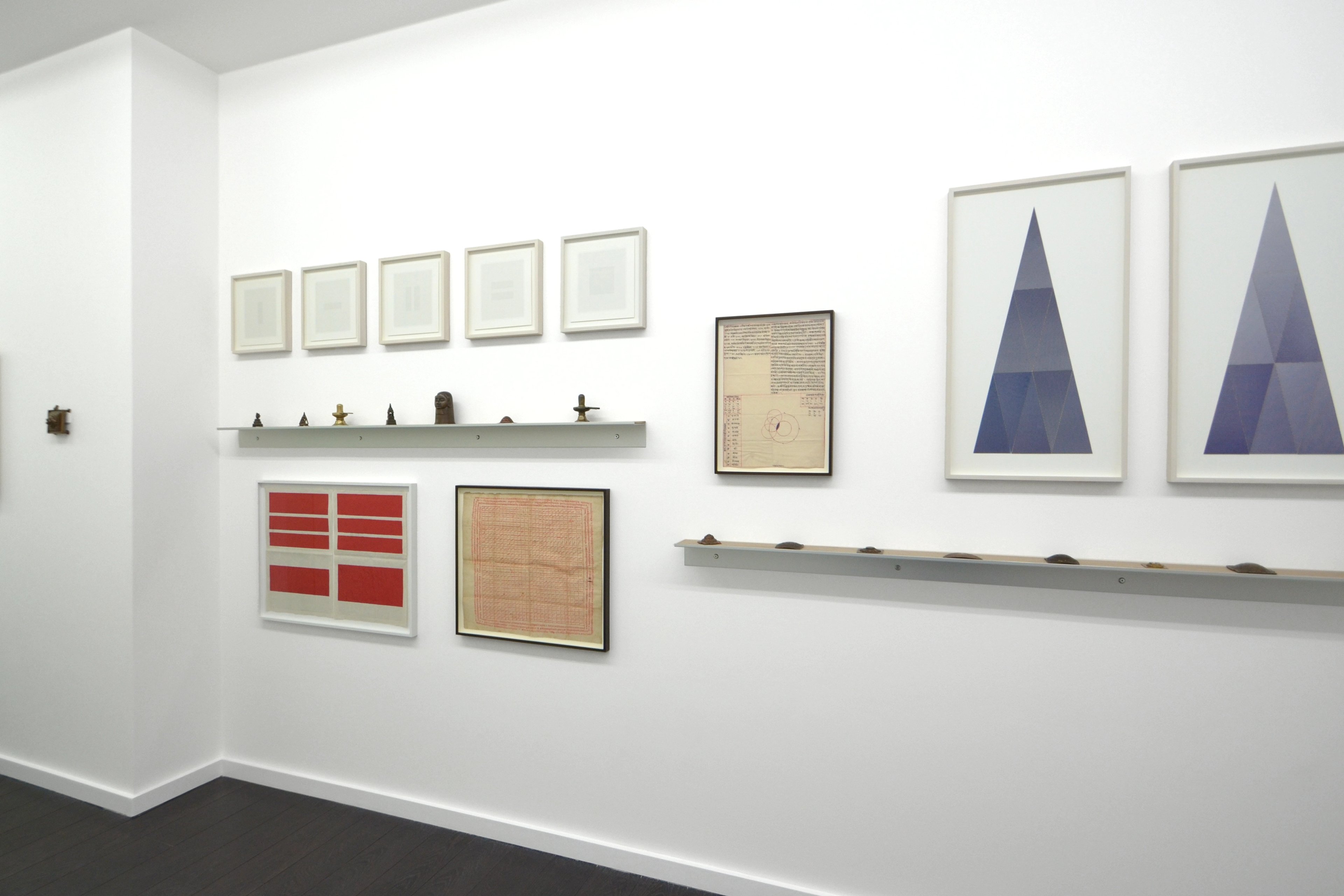
In 2013, Bartha_contemporary & Joost van den Bergh Ltd collaborated on a project entitled Indian Tantric & Western Contemporary
The Indian term tantra is generally linked with mystery and mysticism as well as with sex, magic and hocus pocus in the West.
Indeed, tantrism is connected to all of these and more. Buddhism, Hinduism, Taoism, Jainism, Vajrayana, Bönpo, Ayurveda, and Shamanism are some of the philosophies, religions, and sciences that were influenced by tantrism.
Tantras expand doctrines on the creation and destruction of the universe, the worship of certain deities, spiritual exercises, secret rituals, magical powers and meditation.
Three words in Indian tantrism are related, both phonologically and conceptually: tantra (the philosophy), mantra (the knowledge through sound), and yantra (the means to leading a tantric existence).
Many of the diagrams, mandalas and symbols represented in Indian tantrism are of Jain origin and deal mainly with cosmographic themes. Jains have always made clear diagrams and maps of the world (Jambudvipa) and the cosmos (Lokapurusa). Jains described in the smallest of detail the macro as well as the microcosmos, using notions equivalent to light-years and atoms, long before Western scientists discovered them.
For this exhibition, we have chosen to juxtapose selected tantric objects and drawings with works by contemporary artists that relate to and reflect on some of the notions of tantric art.
Abstract in appearance, the circular tide drawings by the New York artist Jill Baroff depict tidal movements at specific geographic locations. Similar to the astrological studies, these drawings render and explore natural phenomena of cosmic origins.
The late Swiss painter Rudolf de Crignis, who, together with his partner Michael Paoletta, collected tantric drawings for many years, is a perfect example of how the study of yantra has attracted and bridged artistic practices over many centuries.
Hence, it is no surprise that reviews and essays on the work of American painters James Howell, Phil Sims, Winston Roeth, and Kate Shepherd note apparent aesthetic similarities between their paintings and early tantric art.
Literal references also play an important role; Mike Meiré has been referencing Indian philosophical texts in the titles of his works, which are rooted in tantrism. Equally much of Beat Zoderer’s early work shown here is heavily influenced by his experience travelling in India at the beginning of his career.
This exhibition is the result of a shared passion for both Indian Tantric and Western Contemporary Art.
Indian Tantric Western Contemporary _ Exhibition Booklet