Giulia Ricci Rastrum
Considering Musical Scores
A musical score is often simply read as a set of instructions: a visual system through which music is organised and communicated. Yet throughout the practice of modern and contemporary art, the score has also operated as a form of drawing, a diagram, a proposition and a space for interpretation. Its lines may direct a performer, record a sequence or establish the conditions from which something unforeseen can emerge.
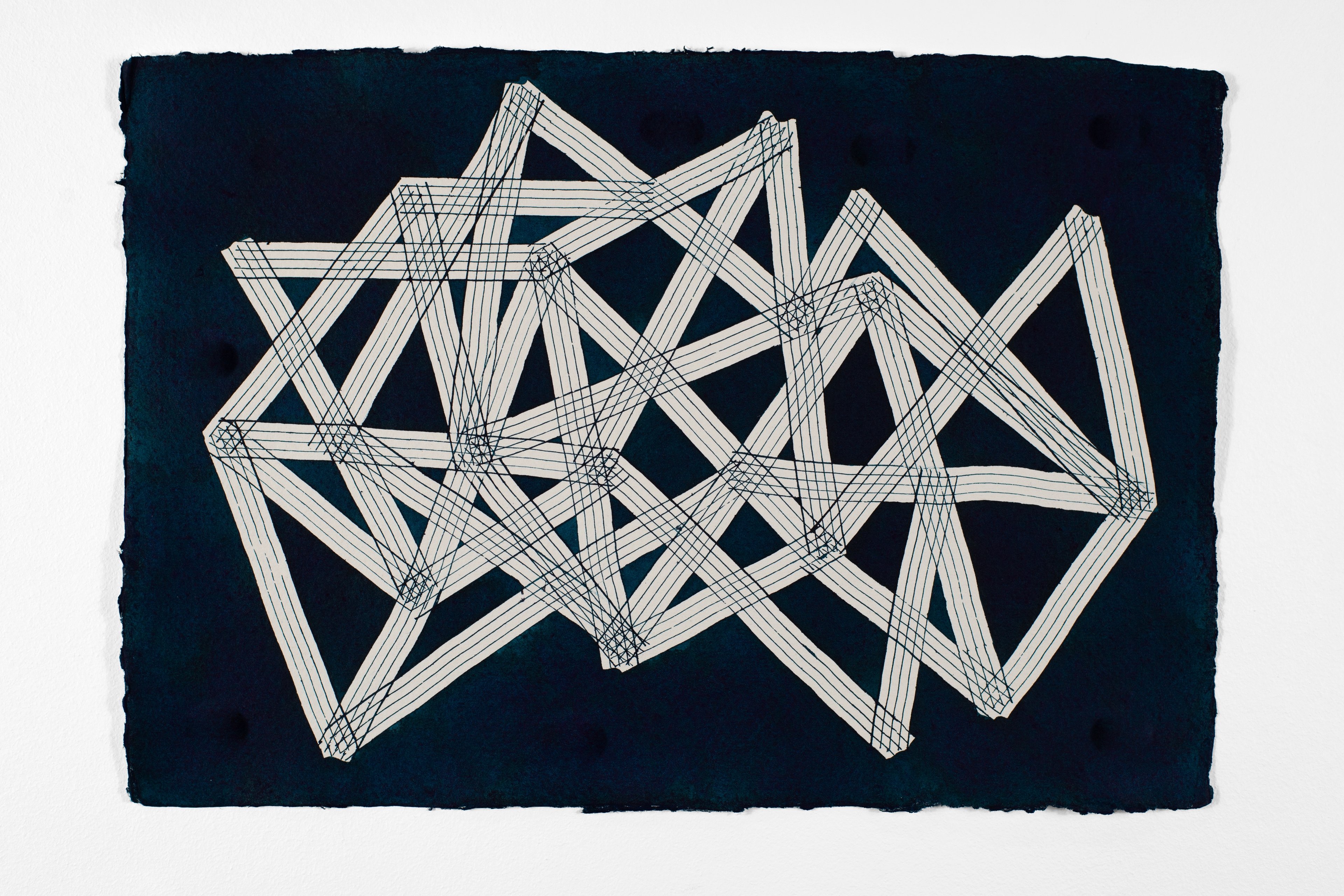
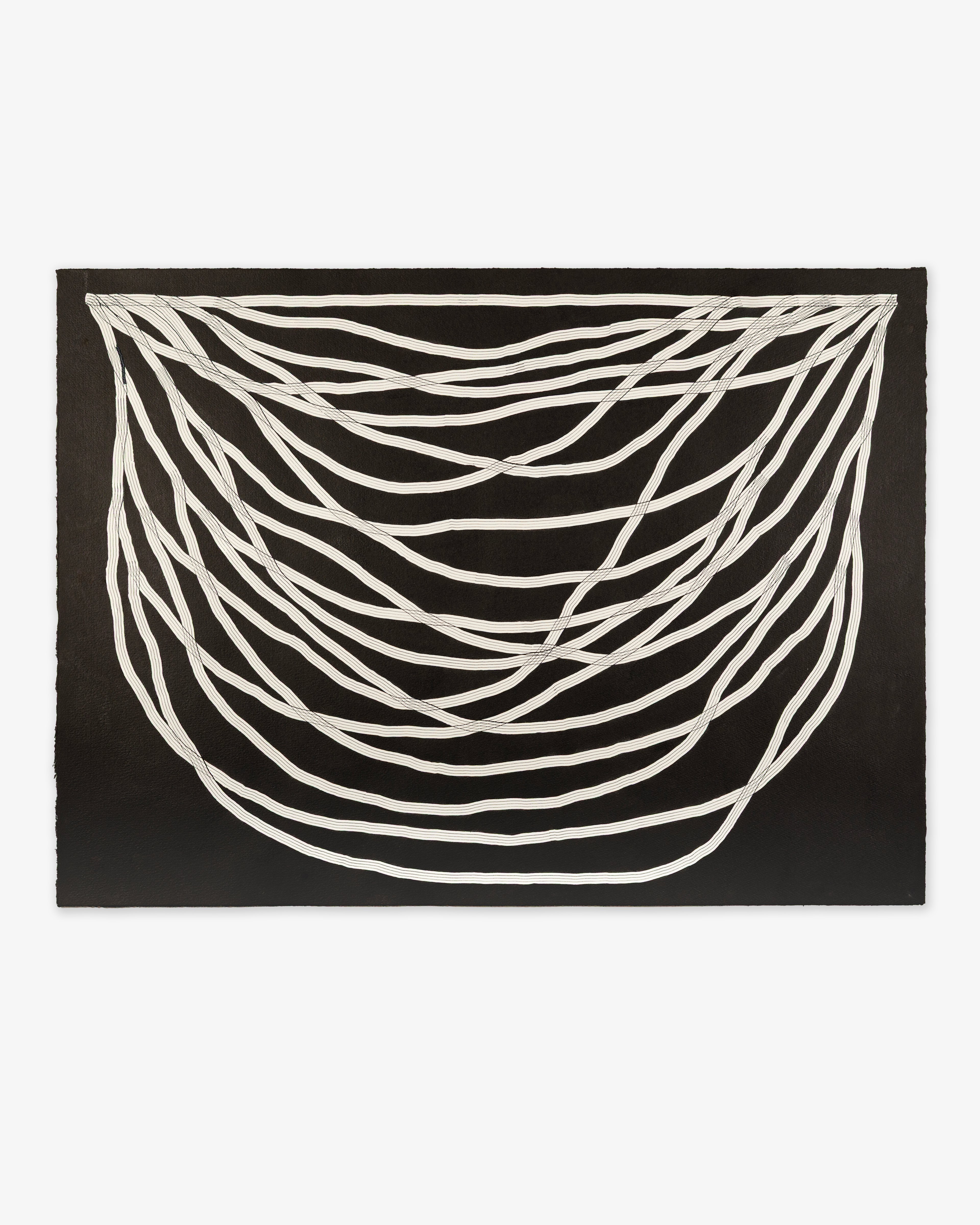
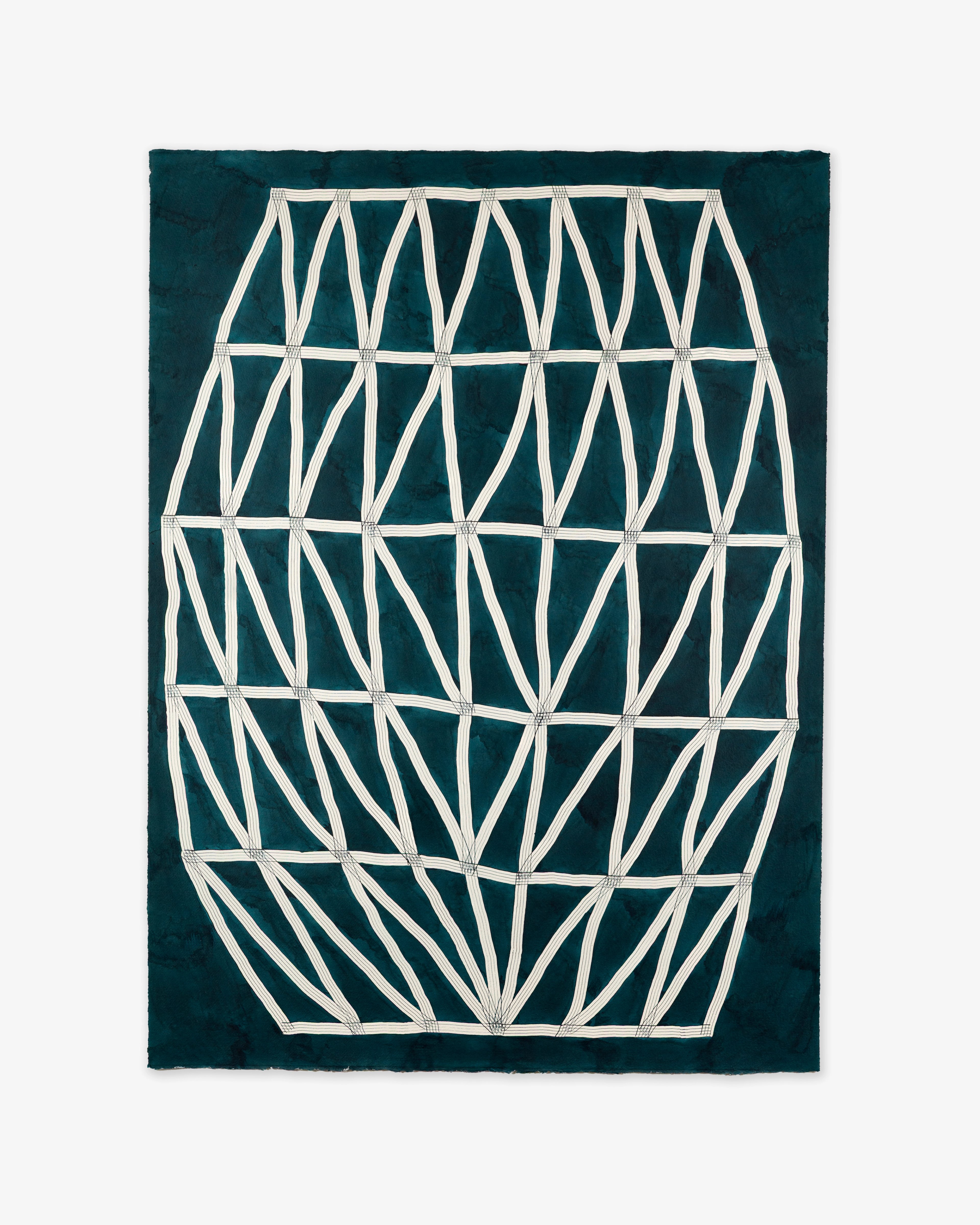
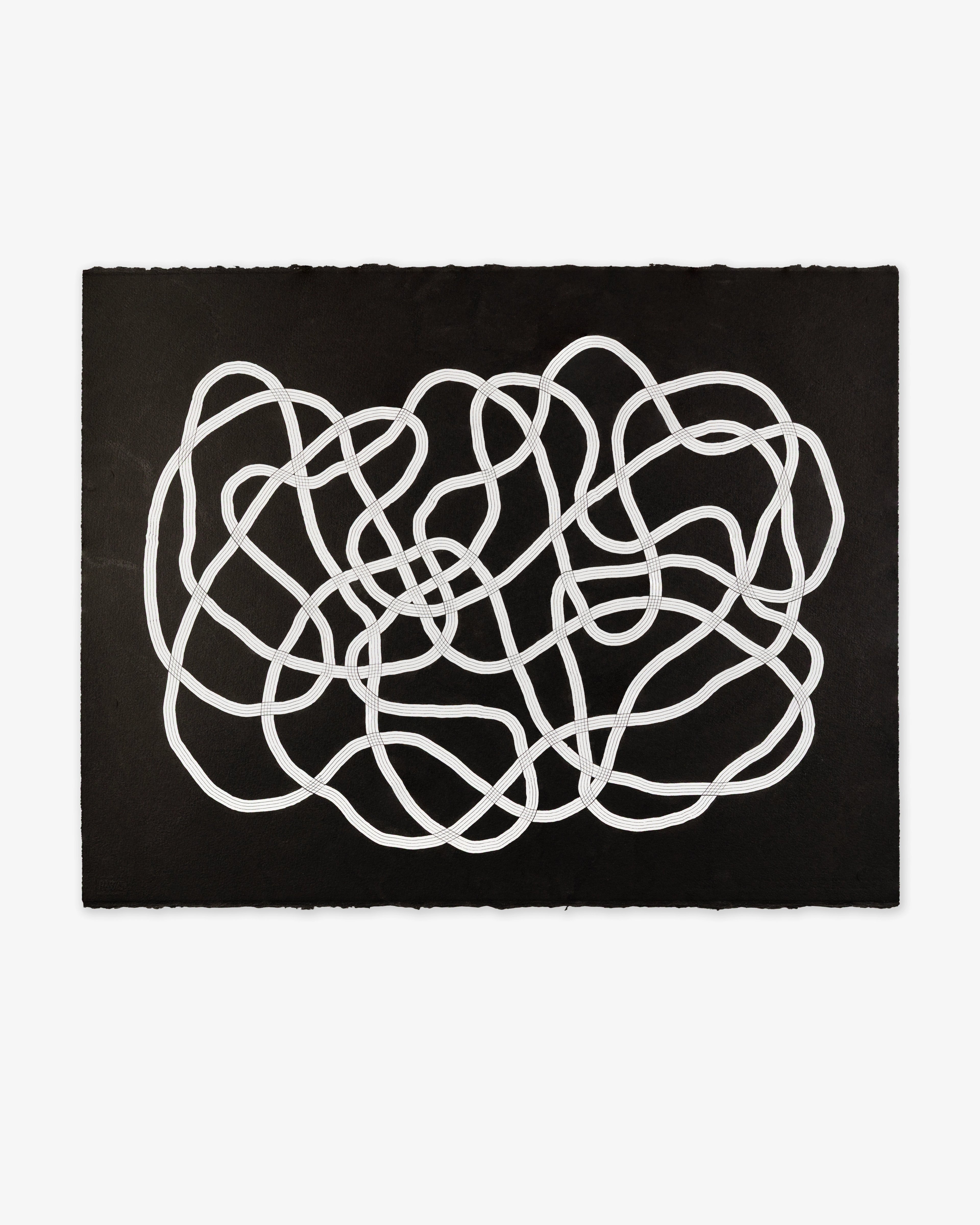
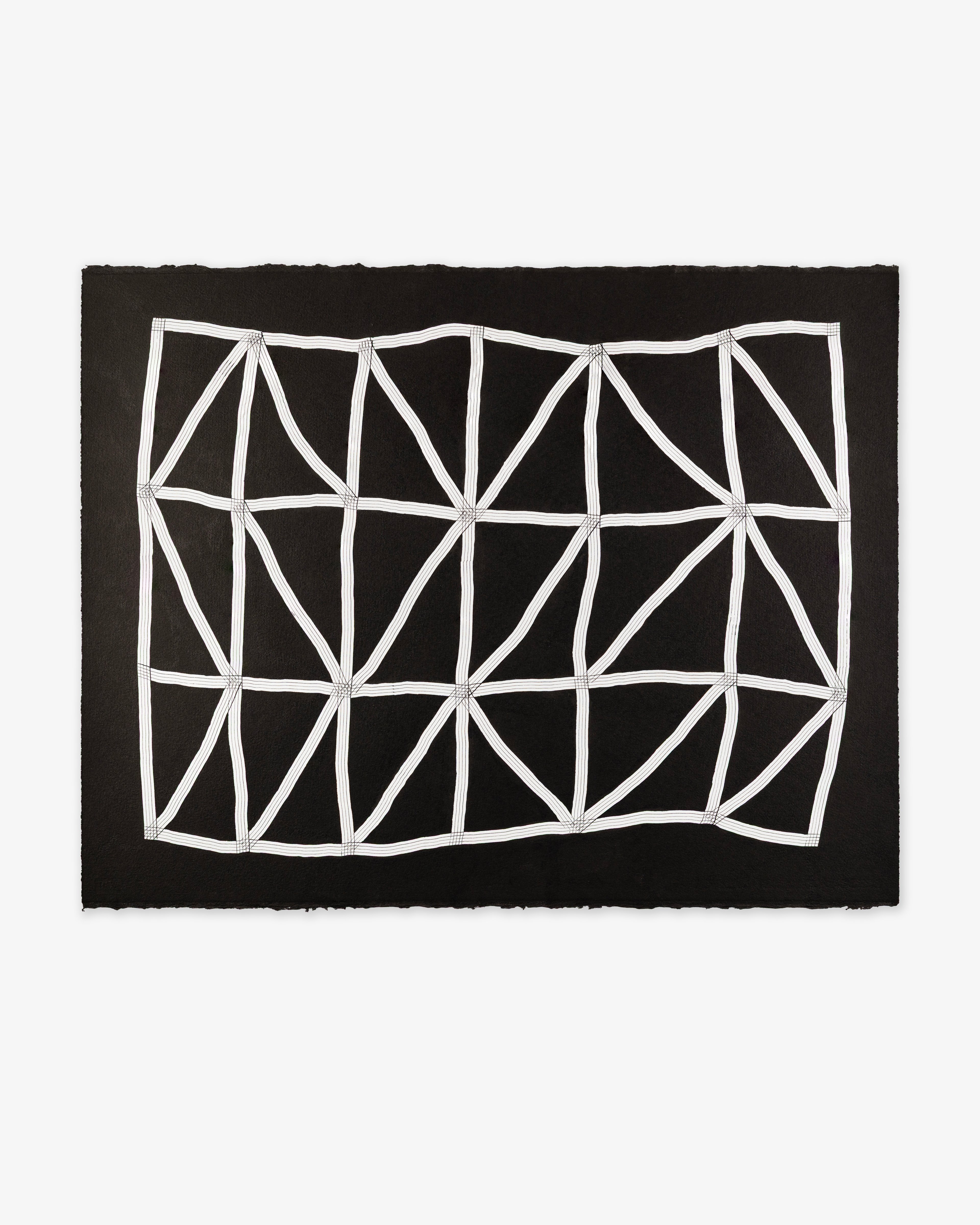
This history offers a broad context for Giulia Ricci’s recent Rastrum Drawings. Made with a five-line nib traditionally used to draw musical staves, Ricci’s works share the visual language of notation without functioning as musical scores. Repeated lines accumulate into shifting structures that suggest cultivated fields, waterways, paths and aerial views. Rhythm is present, but it is carried by the visual movement, determined by the artist’s hand and the material behaviour of ink on paper.
Cage and graphic notation
The relationship between musical notation and visual art changed decisively during the post-war period. John Cage’s scores challenged the assumption that notation should determine a single musical result. In works such as 4′33″, 1952, and Concert for Piano and Orchestra, 1957–58, silence, duration, spatial relationships and chance became compositional materials. The score no longer simply represented sounds chosen by the composer. It established a framework within which performers, ambient conditions and unforeseen events could participate.
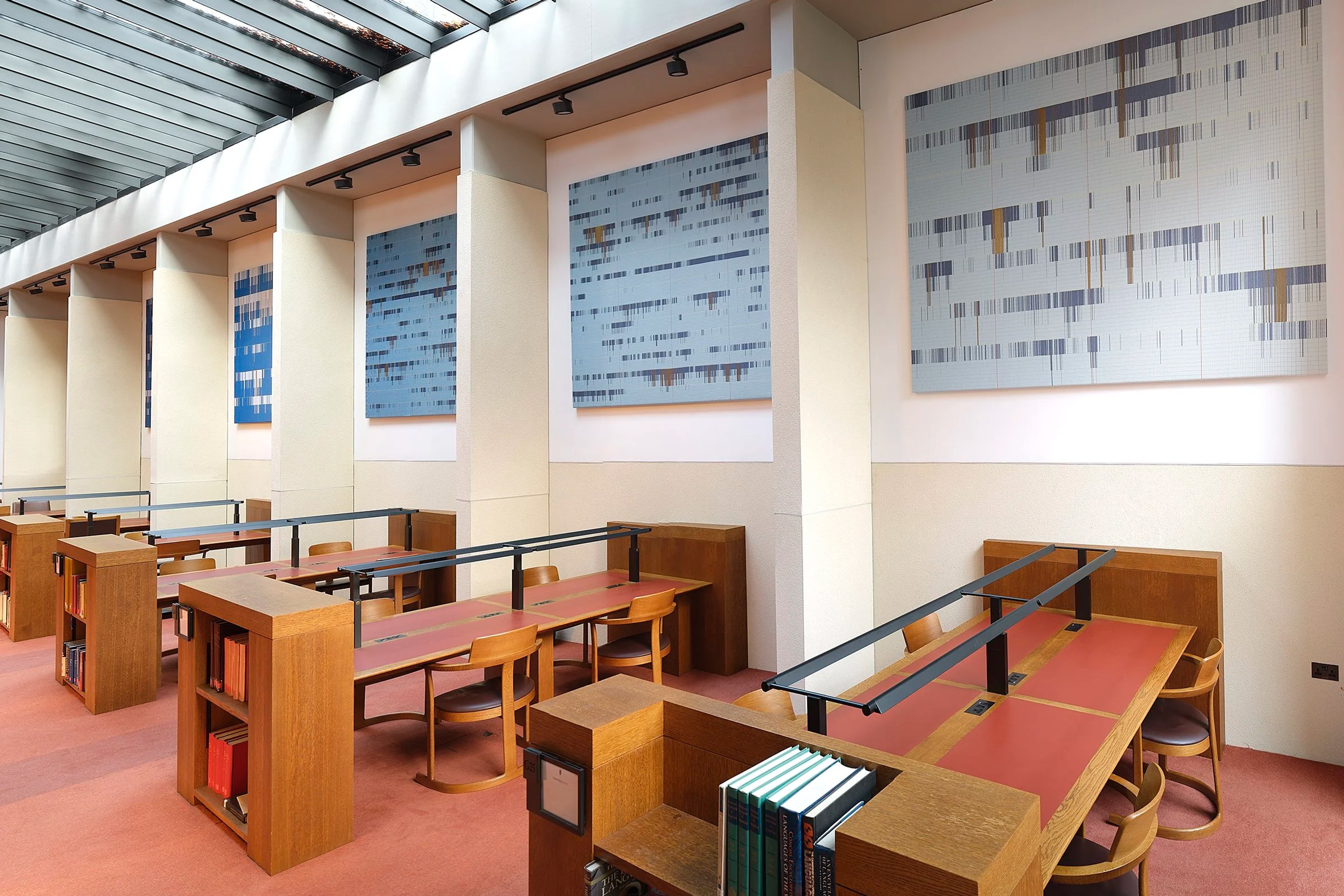
Hence, it comes as no surprise that artists cite Cage as a recurring source of inspiration. Susan Morris’s recent installation Silence (Project for a Library) No 1 to 6 is only one example; here, the artist applied a purely theoretical structure to order the graphical rendition of a sound recording of silence across six panels. The idiosyncratic approach of Cage’s practice invites a wide range of applications.
Indeed, artists and composers around Cage developed this openness in different directions. Earle Brown’s December 1952 consists of floating rectangles distributed across an otherwise empty page. It can be read from different directions and interpreted through changing combinations of pitch, duration, density and volume. Morton Feldman’s early graph scores similarly replaced precise notes with boxes indicating approximate registers and periods of activity. In both cases, musical time became something closer to pictorial space: an open field in which individual elements could be placed without forming a conventional narrative.
In Europe, graphic notation took on an especially rich visual character. Sylvano Bussotti’s intricate scores transformed staves, notes and musical signs into dense, calligraphic compositions. His Five Piano Pieces for David Tudor, 1959, disrupt the apparent clarity of conventional notation with tangled lines, ink pools and ambiguous signs. Roman Haubenstock-Ramati developed modular “music graphics” whose pages could be rearranged, while Anestis Logothetis constructed a personal vocabulary of graphic symbols intended to communicate movement, sound quality and spatial relationships. Cornelius Cardew’s monumental Treatise, 1963–67, extended this approach across 193 pages of lines, circles and geometric forms. With no definitive instructions for their interpretation, the performers must collectively decide how the visual information might become sound.
Scores as written instructions
The score also moved beyond graphic notation and into language. George Brecht, who attended Cage’s experimental composition classes in New York, reduced composition to short written propositions. In Drip Music, 1959–62, the controlled fall of water into a vessel becomes an event that may be performed in numerous ways. Brecht’s scores were small, reproducible and easily circulated. They could be enacted by anyone, without the artist being present.
This apparently modest format became central to Fluxus. Yoko Ono’s instruction pieces proposed works that might be performed physically or completed in the reader’s imagination. Benjamin Patterson turned the folding, tearing and rubbing of paper into musical activity. Alison Knowles treated preparing and sharing food as a compositional structure, while Nam June Paik and Dick Higgins used scores to test the conventions of performance, musical authority and the behaviour expected of instruments and performers.
The score had become more than a document preceding an artwork. It could be the artwork itself, even when no performance followed. It might describe an action, invite participation or simply redirect attention towards an overlooked feature of everyday life.
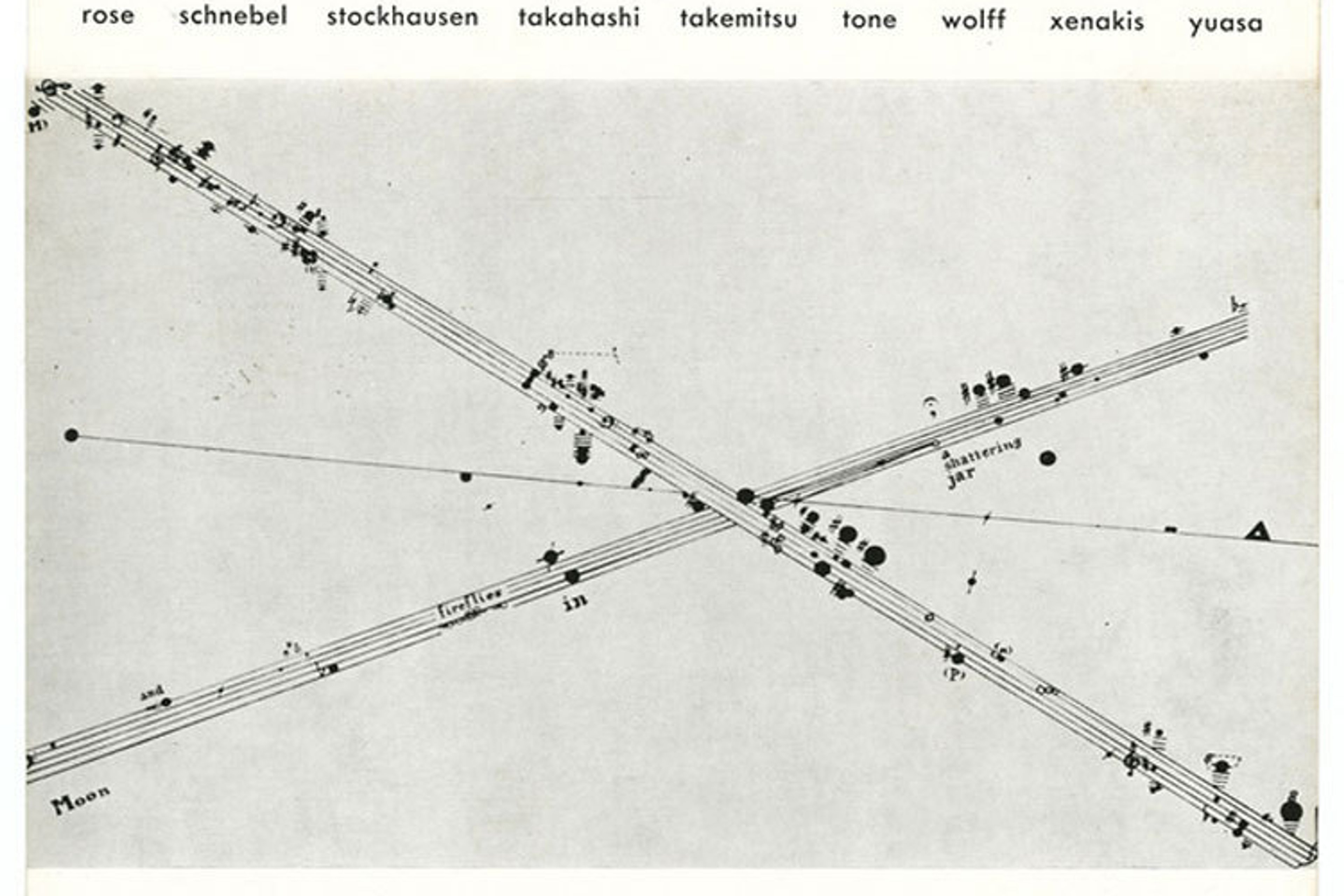
An Exhibition of World Graphic Scores, Minami Gallery, Tokyo, 1962
1 / 4
Experimental notation in Japan
These developments were not confined to an American or European avant-garde. Japan became one of the most important centres for experimental notation. Toshi Ichiyanagi’s graphic scores combined spatial organisation, indeterminacy and calligraphic gesture. In 1962, Ichiyanagi and the composer and critic Akiyama Kuniharu organised An Exhibition of World Graphic Scores at the Minami Gallery in Tokyo. Staged during Cage and David Tudor’s first visit to Japan, the exhibition brought together almost 150 scores by Japanese and international artists and composers.
Mieko Shiomi extended the idea of the score across geography. Her Spatial Poem, 1965–75, consisted of nine instructions sent to participants around the world. More than 230 collaborators in twenty-six countries returned descriptions of their actions, which Shiomi assembled into maps, diagrams and publications. Here the score became a distributed social structure, joining individual experiences across distance and time.
Takehisa Kosugi and Yasunao Tone developed equally exploratory approaches. Kosugi’s instructions frequently draw attention to minute physical actions, barely perceptible sounds and the behaviour of everyday materials. Tone’s graphic scores and later experiments with deliberately damaged digital media approached notation as a source of disruption rather than transparent communication. For Tone, the value of a score lay partly in its ability to produce results that could not be predicted by looking at it.
Later artists and the score
Later visual artists have continued to treat the score as both a working system and a subject in its own right. Channa Horwitz’s Sonakinatography, developed from the late 1960s, uses graph paper, numerical sequences and colour to plot time, rhythm and movement. The drawings possess a rigorous visual autonomy, yet their structures can also be translated into sound, speech, light or choreography.
Christian Marclay finds notation embedded within the visual environment. For Graffiti Composition, 1996–2002, he placed blank sheets of manuscript paper around Berlin and photographed the additions made by passers-by. The accumulated marks subsequently became a score for musical interpretation. In Shuffle, 2007, photographs of musical notes found on packaging, clothing, signs and other everyday surfaces form a deck of cards that can be arranged and performed in changing sequences.
Christine Sun Kim has more recently used the visual grammar of musical notation to examine the cultural authority of sound. By combining musical signs with American Sign Language, diagrams, and written language, her drawings question the assumption that music and sound belong primarily to hearing culture. Samson Young similarly employs notation, transcription, and recording to address how sound is shaped by geography, conflict, technology, and political power.
Across these practices, the score remains suspended between order and possibility. It structures time but does not necessarily determine what will happen. Its lines can be precise without producing certainty. Indeed, the gap between notation and its interpretation is often where the work begins.
Giulia Ricci
Rastrum Drawing #38, 2026
Sumi ink on Fabriano Artistico paper
56.5 × 77 cm
22.2 × 30.3 in
Price on request
Giulia Ricci
Rastrum Drawing #29, 2026
Rohrers Traditional Ink on Fabriano Artistico paper
77 × 56.5 cm
30.3 × 22.2 in
£2,600
Giulia Ricci
Rastrum Drawing #21, 2025
Sumi ink on Royal Watercolour Society watercolour paper
50 × 65 cm
19.7 × 25.6 in
£2,400
Giulia Ricci
Rastrum Drawing #19, 2025
Sumi ink on Royal Watercolour Society watercolour paper
50 × 65 cm
19.7 × 25.6 in
£2,400
Ricci's Rastrum Drawings
Ricci’s Rastrum Drawings approach this history from a distinct position. They are drawings rather than compositions and do not ask to be performed. Nevertheless, the rastrum carries the material memory of musical notation into the work. Its five parallel lines establish a measured order, but repetition never produces complete uniformity. Pressure changes, ink gathers, lines converge, and the hand's movement remains visible.
This tension between system and variation has long been central to Ricci’s practice. In the Rastrum Drawings, it also acquires an ecological resonance. Their lines recall the geometries through which landscapes are cultivated, mapped and controlled, yet the structures remain fluid and vulnerable. Fields appear to shift, waterways change course, and ordered patterns become unstable. Landscape is no longer presented simply as something measured and organised, but as a living system increasingly subject to disruption.
Seen in this context, the musical staff becomes more than a visual motif. It provides Ricci with a structure through which repetition, touch, time and instability can be held together. Like an open score, each drawing begins with an ordering principle but remains receptive to change.
Getty Research Institute’s online publication The Scores Project: Experimental Notation in Music, Art, Poetry, and Dance, 1950–1975 provides an extensive and freely accessible account of experimental scores across the post-war avant-garde. Its essays, archival documents, and reproductions trace the international exchanges through which notation moved among music, drawing, poetry, dance, performance, and conceptual art.
Please also consider, related to the subject, John Snijders' excellent book, Ixion: Morton Feldman, Notation, Performance Practice, and Jackson Pollock: 3 (Drawing Theory).
And, Drawing Towards Sound – Notation, Diagram, Drawing, edited by Kelly Chorpening and Rebecca Fortnum