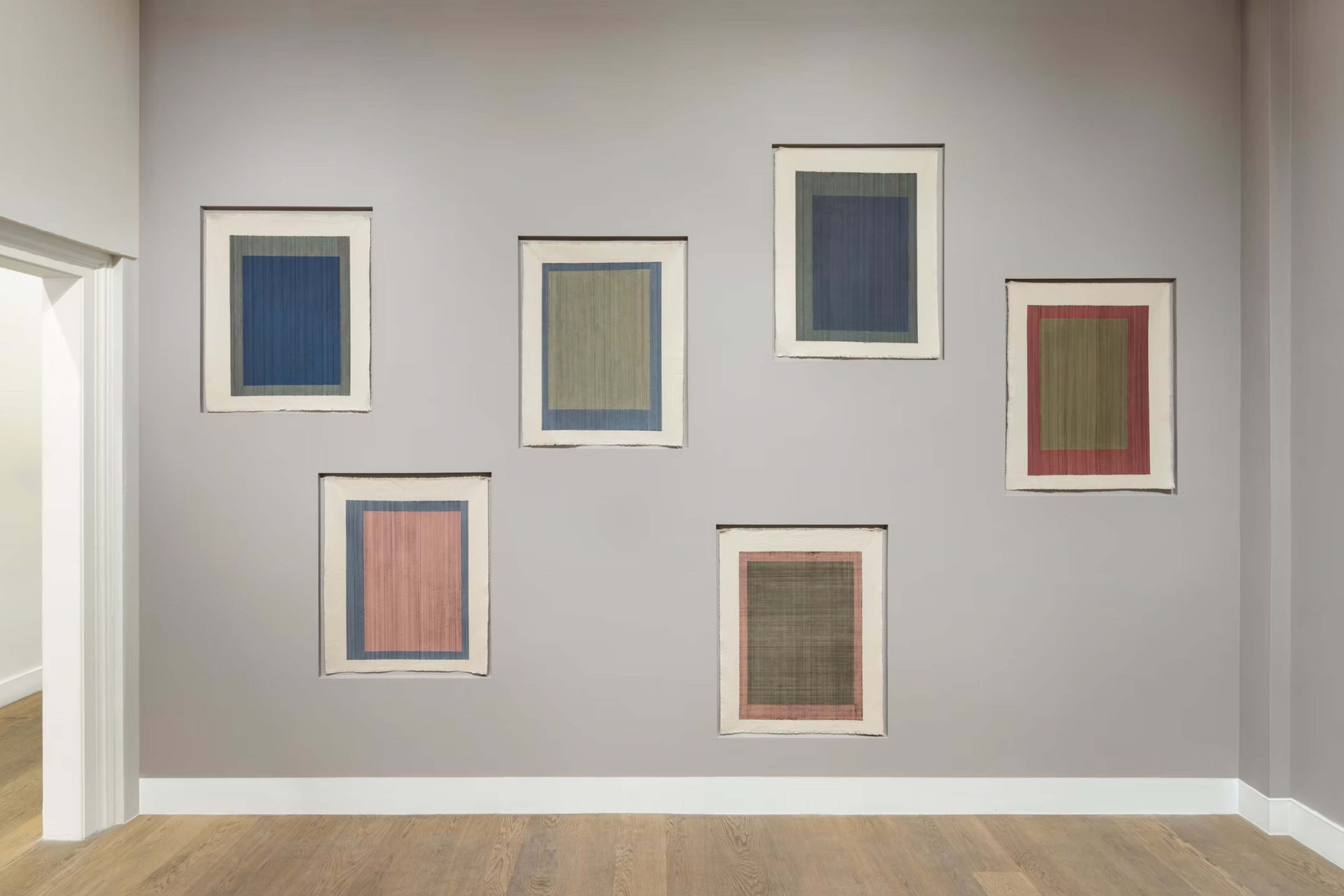
At the Threshold
The forthcoming exhibition Into The Surface features a suite of recent works by Defne Tesal entitled Doors; the suite led us to consider the recurring theme of doors in Modern and Contemporary Art. Indeed, the image of a door immediately suggests more than its physical form. It functions as a pictorial portal between one space and another, or perhaps a gateway to somewhere not yet seen. Whether open, closed or only partly revealed, a door invites us to imagine what may lie beyond it. Throughout the practice of modern and contemporary art, artists have returned to this familiar architectural element to explore perception, memory, transformation and the uncertain boundary between the visible world and an imagined one.
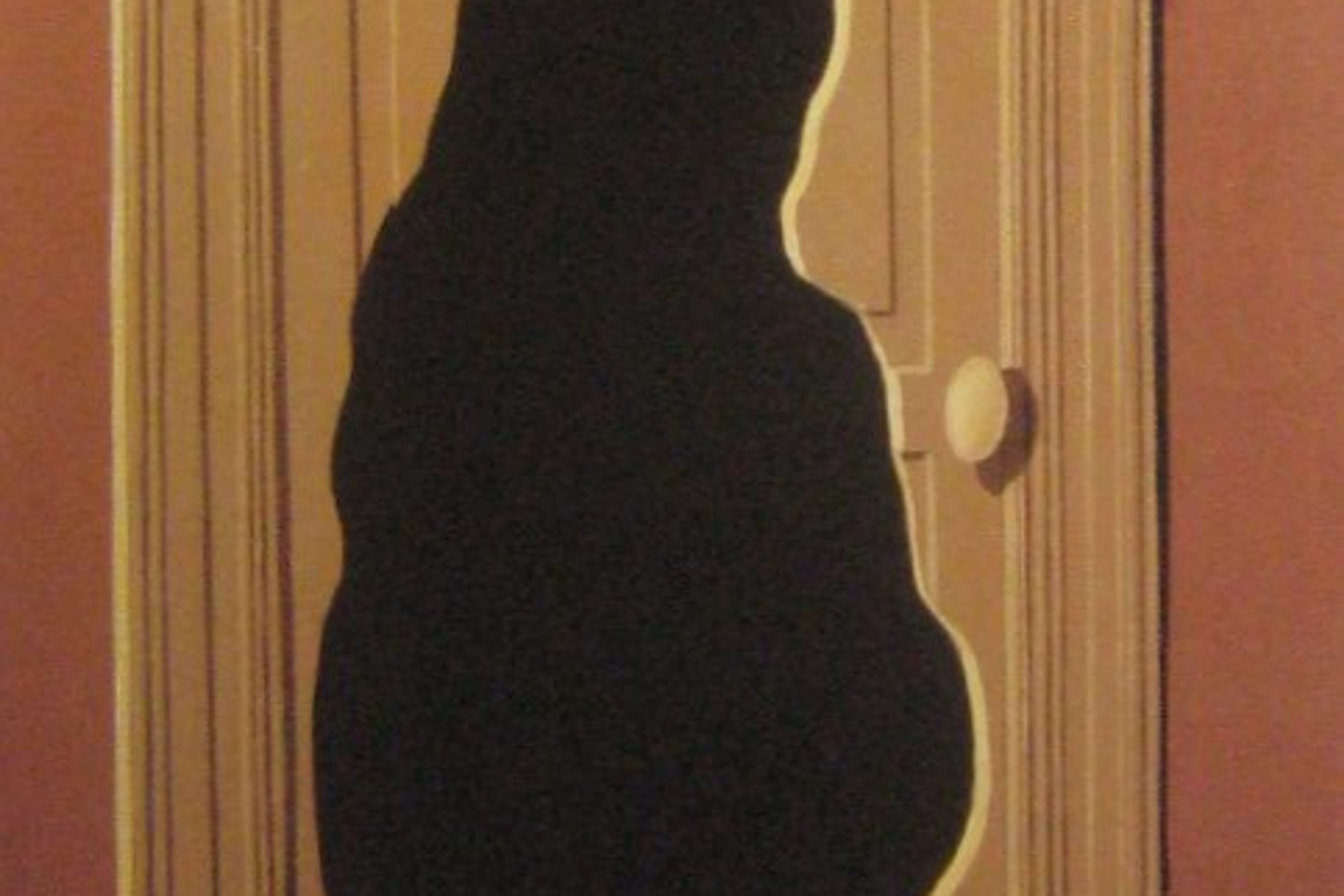
This ambiguity is central to René Magritte’s La Réponse imprévue (The Unexpected Answer) of 1933. A closed wooden door has been breached by an irregular, body-like opening. Darkness occupies the space behind it. The door remains recognisable, yet its function has become uncertain: it both obstructs and admits. We are granted access to another space, but almost nothing within it can be seen.[1]
Magritte returned to the motif in La Victoire (The Victory) of 1939. A freestanding door appears on a beach, detached from any wall or building. It opens onto the sea and sky already present around it. No longer separating an interior from an exterior, the door frames one reality within another. It makes literal a condition shared by all paintings: the canvas is a surface, but it can also appear to open onto another world.[2] Magritte does not explain the mystery. He gives it a familiar form.
For modern artists, the door was not only a symbol but also a formal device. Its frame divides the picture into adjacent fields, while its opening introduces depth, movement and duration. In the Latvian modernist Niklāvs Strunke’s Man Entering a Room of 1927, figure, doorway and surrounding architecture are reduced to a series of geometric planes. The man appears to be absorbed into the geometry of the entrance. We see neither where he has come from nor what awaits him, only the unstable condition of being between two rooms.[3]
The painting applies a Cubist and Constructivist language to the act of crossing. Space is not arranged as a calm recession towards a destination. Instead, the body and building momentarily become part of the same angular decompositional structure. The doorway marks a change of location, but also a change in how the figure can be perceived, standing on the very threshold to another dimension.
In the same year, Marcel Duchamp turned the contradiction of the door into a physical arrangement. Door: 11 rue Larrey was installed between two adjacent openings in his small Paris apartment. Closing the doorway to one room necessarily opened the other, so that the single door was always open and closed at once.[4]
Duchamp’s practical solution also unsettled the apparent certainty of an everyday object. A door usually presents a choice between access and separation. Here those conditions became simultaneous. The work challenged the French proverb that a door must be either open or closed, replacing a simple opposition with a continuously shifting relationship between spaces.
Duchamp’s final work, Étant donnés: 1° la chute d’eau, 2° le gaz d’éclairage (1946-66), reverses the promise of passage. The viewer encounters an old wooden door that cannot be opened. Two peepholes reveal a carefully constructed scene beyond, but the body is denied entry.[5] Looking becomes an intimate and potentially uncomfortable act. The door controls not only what may be seen, but how it may be seen.
For the Surrealists, doors frequently connected ordinary domestic space with the unstable territory of dreams and desire. In Dorothea Tanning’s self-portrait Birthday of 1942, the artist stands before an apparently endless succession of open doors. Tanning later recalled being fascinated by the doors crowded together in her New York apartment, with their changing planes, shadows and “imminent openings and shuttings”. From this observation came what she called “a dream of countless doors”.[6]
Each threshold promises another, but there is no final room. The doors construct psychological rather than measurable depth. Tanning stands at the entrance to this imaginary realm not as someone waiting to be admitted, but as its guide. As in Magritte, the familiar door does not resolve the mystery. It gives the unknown an architectural shape.
The symbolic force of a doorway is not purely conventional. Event Segmentation Theory proposes that the mind divides continuous experience into separate events, especially when circumstances change, and predictions need to be updated.[7] A doorway provides a clear physical signal that one situation may be ending and another beginning.
In post-war and contemporary art, the door increasingly moved from depicted image to physical material. Gordon Matta-Clark’s Doors, Floors, Doors of 1976 was made for the inaugural exhibition at PS1 in New York. Using the proportions of a nearby door, Matta-Clark cut vertically aligned rectangular openings through three floors of the former school, allowing a view from an upper classroom towards the basement.[8] The familiar doorway became an incision through the building, exposing spaces that architecture normally keeps apart.
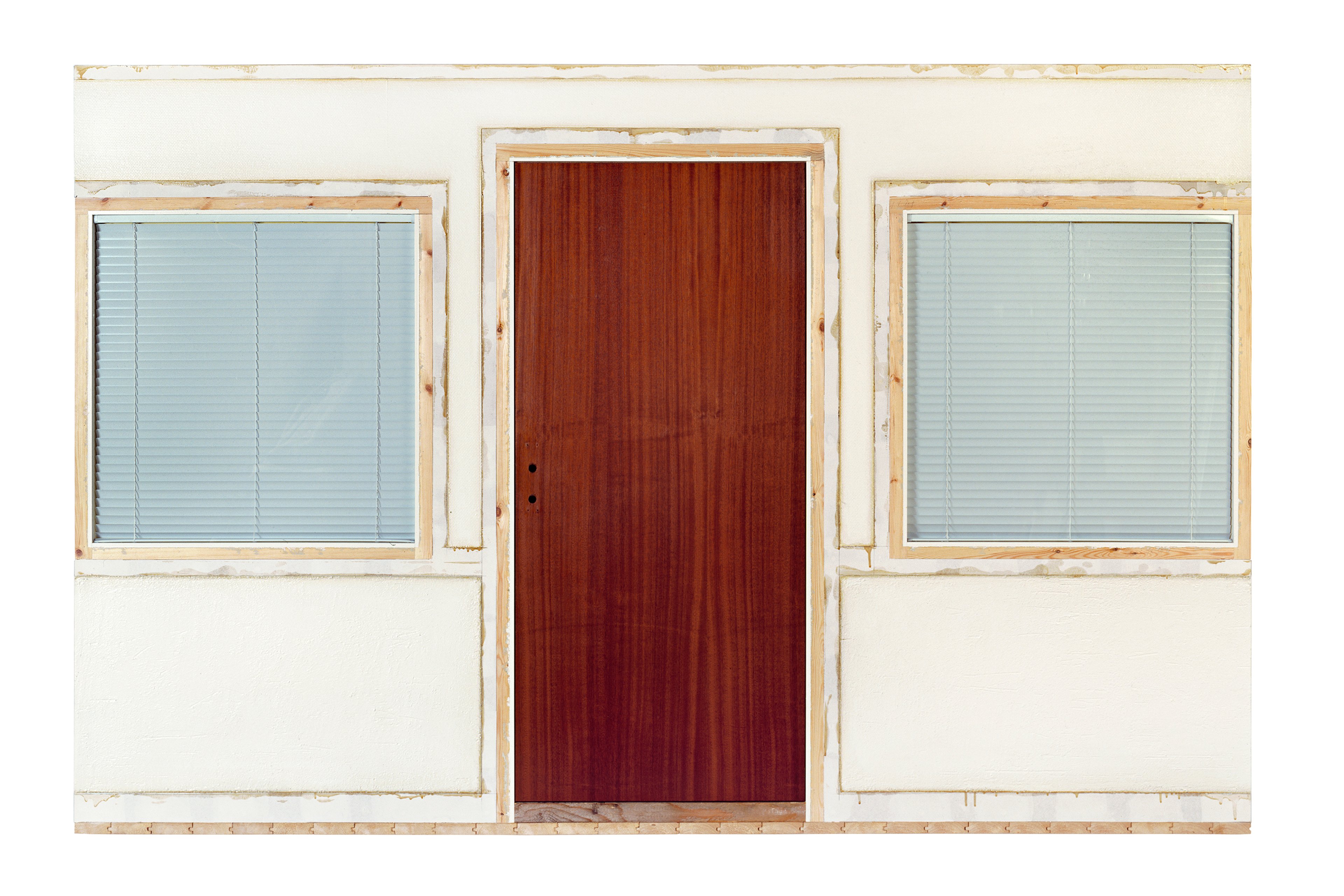
Clay Ketter’s seminal work Suckerpunch Motel Wall, 2001, explores a similar context. Here, ideas or trompe-l'œil converge with a recorded memory of a physical space, where the archetypal compositional division of the work puts the door centre stage. Stripped bare and void of any handle, a broader, possibly more sinister subcontext emerges.
Robert Gober’s handmade doors of the late 1980s appear more conventional, yet also resist ordinary use. In Untitled Door and Door Frame (1987-88), a frame allows the visitor to enter a room while its detached, handleless door rests against the opposite wall. The object associated with privacy and protection has been displaced from its function. It remains recognisable, but can no longer secure the space it defines.[9]
Do Ho Suh’s translucent fabric reconstructions of former homes take a different approach. Works such as Passage/s reproduce corridors, entrances and doors from buildings in Seoul, New York and elsewhere. They can be walked through, but their thin fabric walls possess none of architecture’s usual permanence.[10] These portable thresholds give physical form to migration and memory, suggesting that home is not only a building but also a structure carried with us.
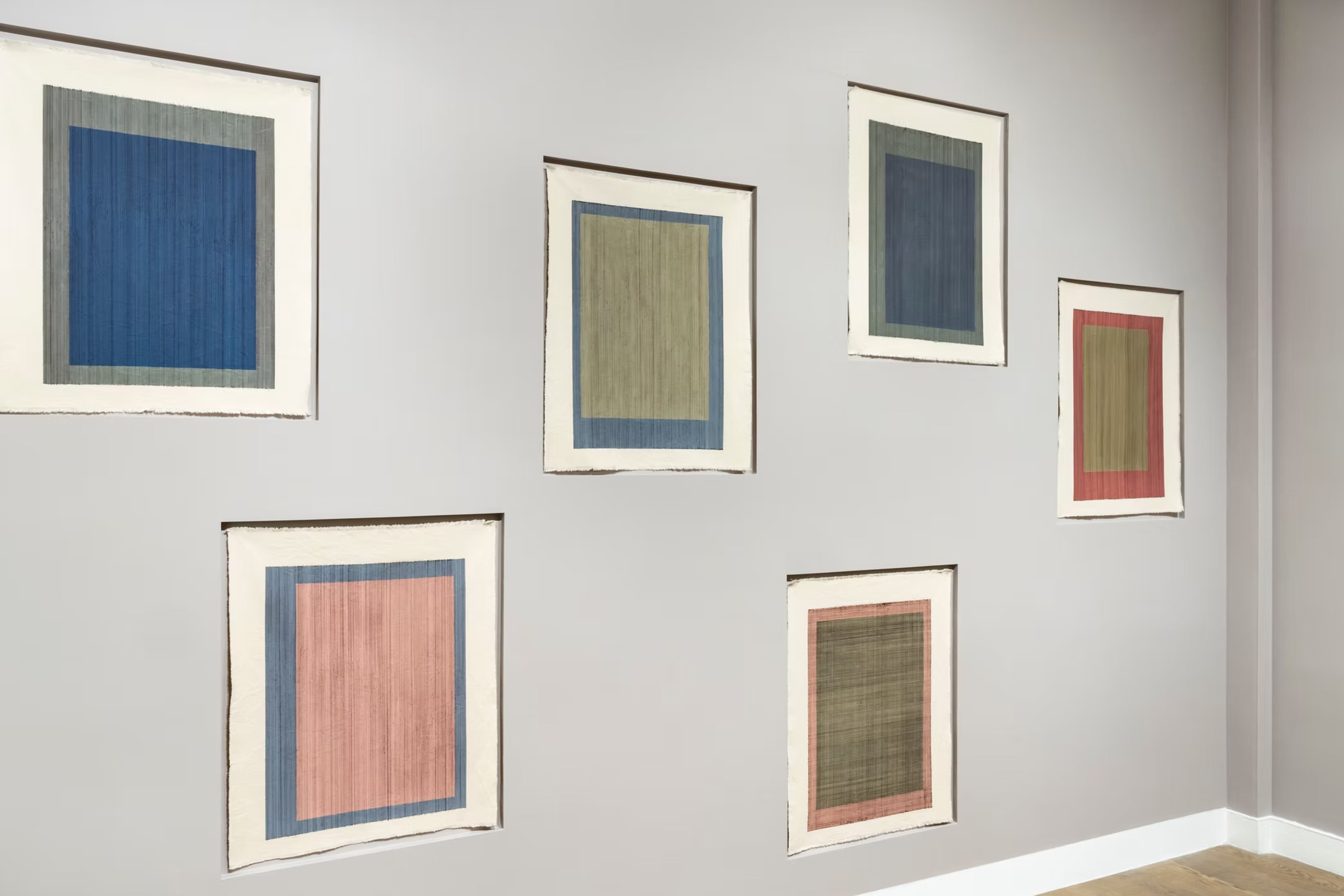
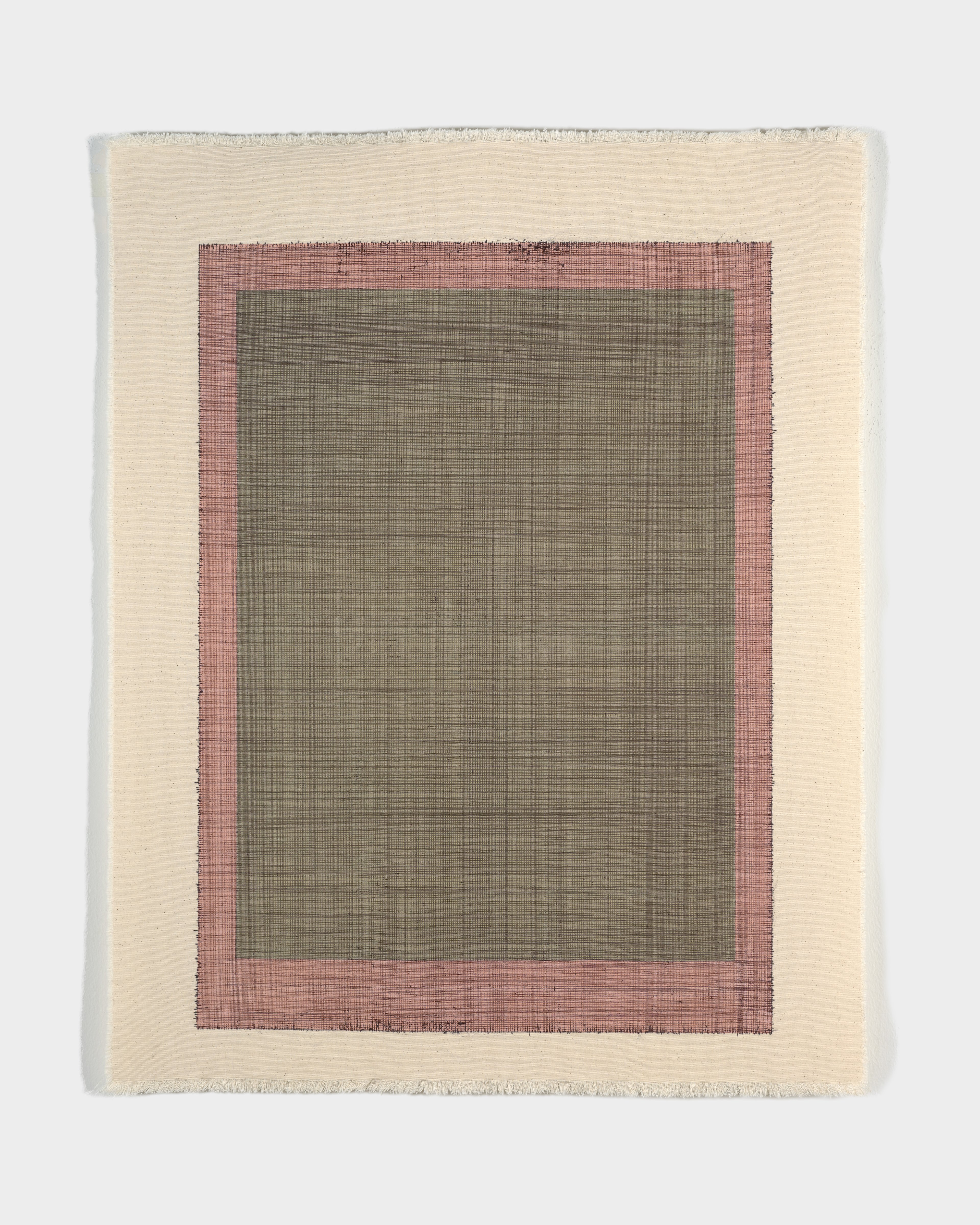
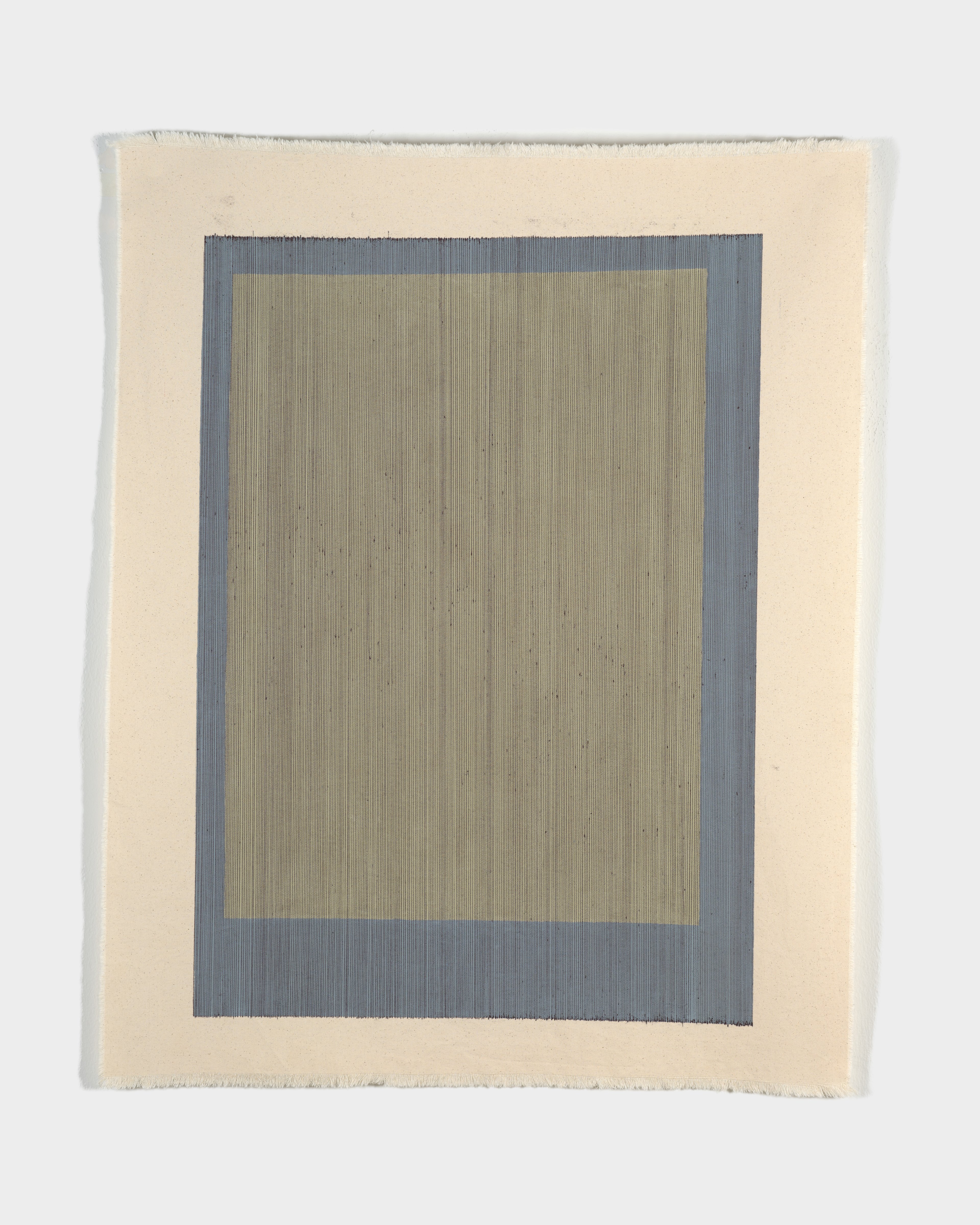
Defne Tesal’s recent Door paintings approach the motif after most descriptive information has been removed. The image is reduced to two fields of colour, one held within the other, painted and drawn on fabric. There is no handle, hinge, wall or recognisable room. Nothing identifies which side is inside or what might exist beyond the central form.
The title, nevertheless, changes how the geometry is perceived. A rectangle within a rectangle begins to suggest an opening, a frame or a plane at an uncertain depth. The eye moves between reading the inner field as something resting on the surface and experiencing it as a space into which one might enter. Unstretched fabric strengthens this instability. Unlike the fixed resistance of a wooden door or wall, it responds to touch, gravity and movement. Paint and pen inhabit a soft, yielding support.
Tesal’s wider practice is grounded in repetition and material-led processes. Across painting, drawing, embroidery, woven sculpture and installation, gestures accumulate gradually rather than moving towards an emphatic conclusion. The Delfina Foundation relates this approach to a search for stillness against the speed and persistent forward momentum of contemporary life.[11]
In this context, the Door works do not constitute a decisive passage. Nor do they reference the paradigm of Albers' squares within a square (Homage to the Square). They hold the viewer at the threshold. Their repeated structure suggests a sequence, yet each remains self-contained. Depth is present, but its distance cannot be measured. The inner rectangle might recede, hover or press gently forward.
Where Magritte placed an ordinary door in an impossible landscape, Tesal begins with the door after it has almost ceased to be an object. What remains is its elementary spatial proposition: one field inside another, here beside there, surface alongside imagined depth. A door is not simply an entrance to another world. It is the point at which another world becomes conceivable.
Notes and sources
- Royal Museums of Fine Arts of Belgium, René Magritte, La Réponse imprévue, 1933.
- Christie’s, René Magritte, La Victoire, 1939.
- Latvian National Museum of Art, Niklāvs Strunke, Man Entering a Room, 1927.
- Duchamp Research Portal, photograph of the door at 11 rue Larrey; Israel Museum, Door: 11 rue Larrey, Paris.
- Philadelphia Museum of Art, Marcel Duchamp: Étant donnés; Michael R. Taylor, Marcel Duchamp: Étant donnés, Philadelphia Museum of Art and Yale University Press, 2009.
- Dorothea Tanning Foundation, Birthday, 1942; Philadelphia Museum of Art collection commentary.
- Jeffrey M. Zacks et al., “Event Perception: A Mind-Brain Perspective”, Psychological Bulletin 133, no. 2, 2007, pp. 273-293.
- MoMA PS1 Archives, Gordon Matta-Clark, Doors, Floors, Doors, 1976.
- Walker Art Center, Robert Gober, Untitled Door and Door Frame, 1987-88.
- Tate, Do Ho Suh: Walk the House exhibition guide; Victoria Miro, Do Ho Suh: Passage/s, 2017.
- Delfina Foundation, Defne Tesal.
Further conceptual context: Georg Simmel, “Bridge and Door” (1909); Arnold van Gennep, The Rites of Passage (1909); Gaston Bachelard, The Poetics of Space (1957).
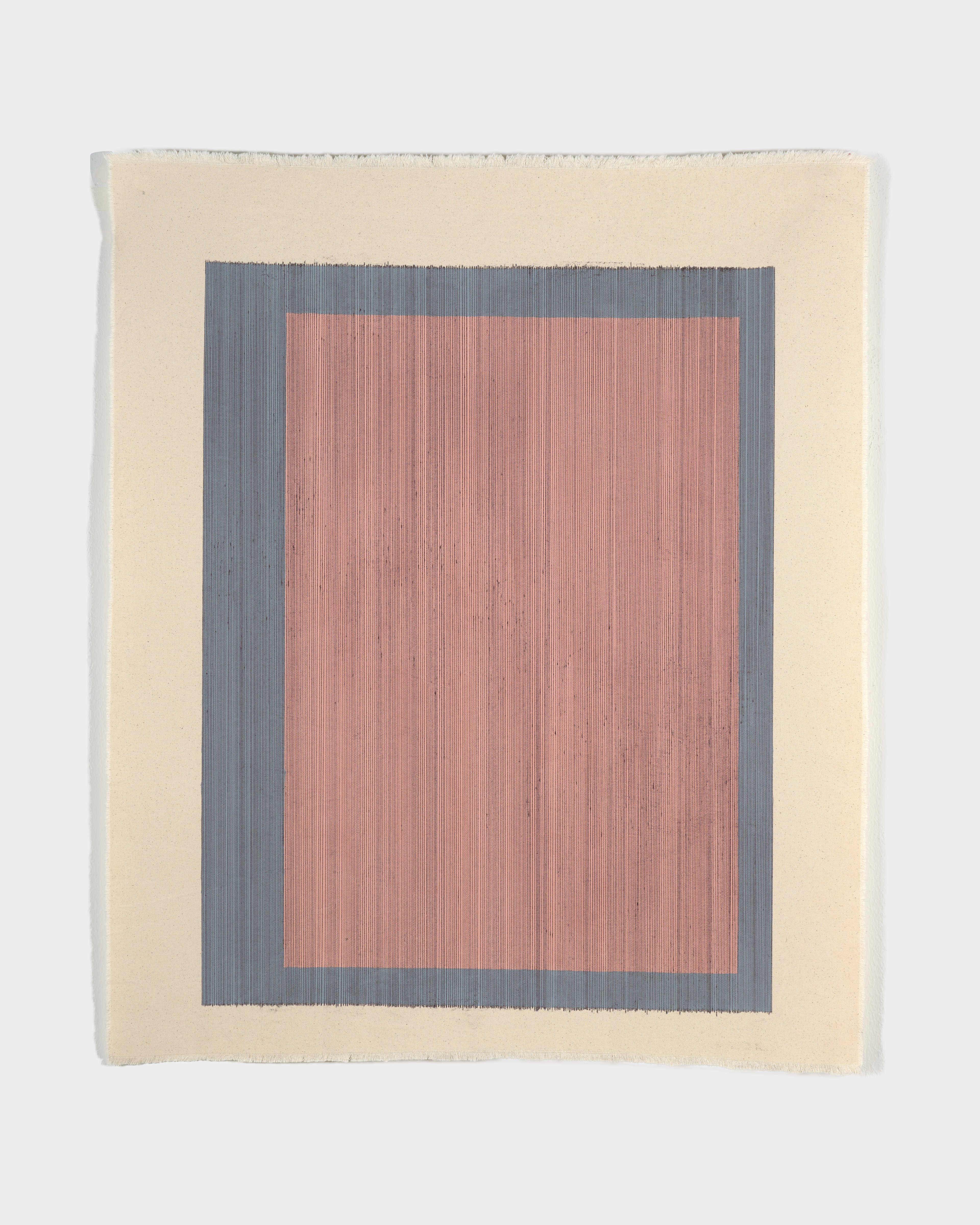
Defne Tesal
Door 3, 2025
Acrylic and pen on fabric
94 × 77.5 cm
37.0 × 30.5 in
£3,600
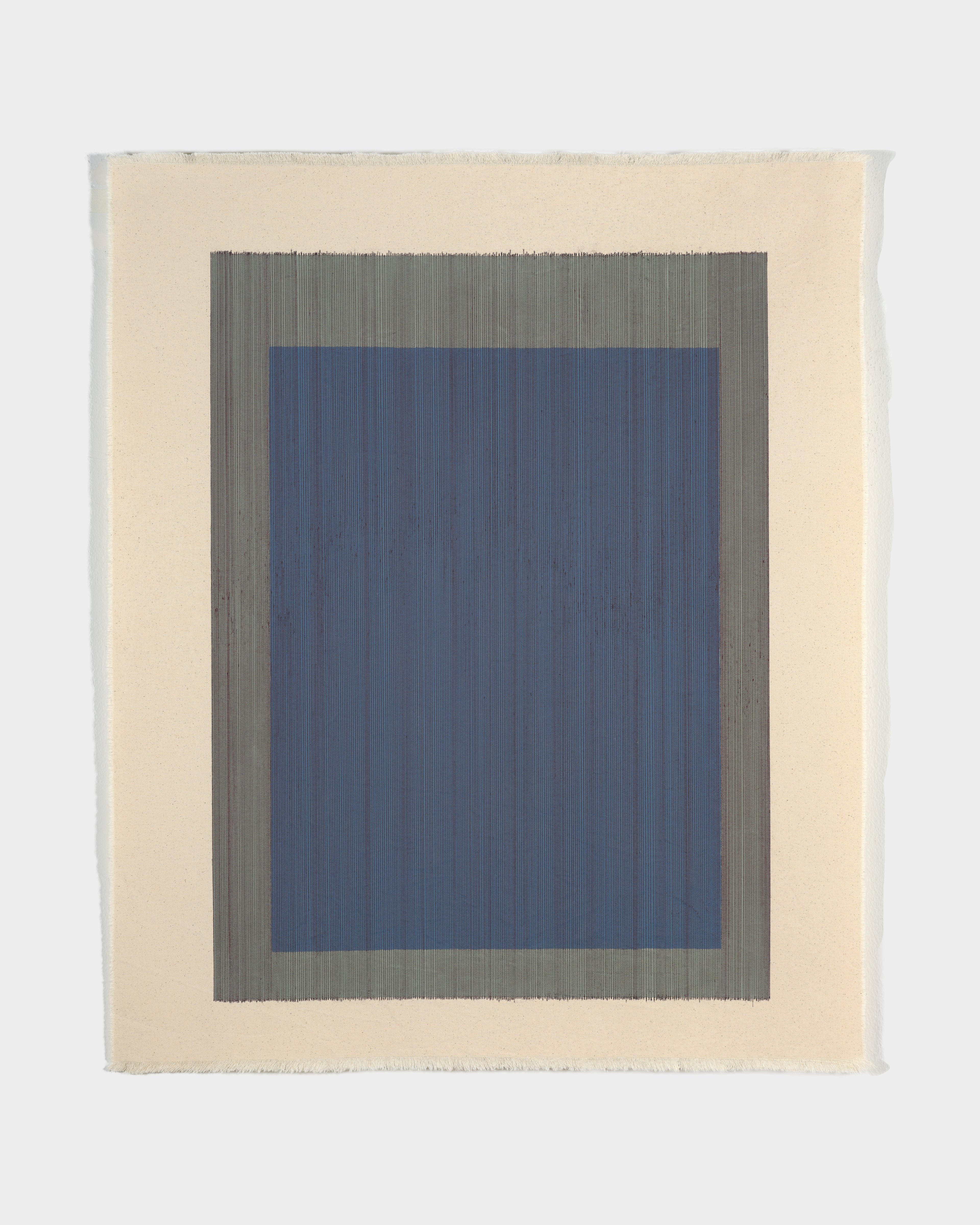
Defne Tesal
Door 4, 2025
Acrylic and pen on fabric
94 × 77.5 cm
37.0 × 30.5 in
£3,600
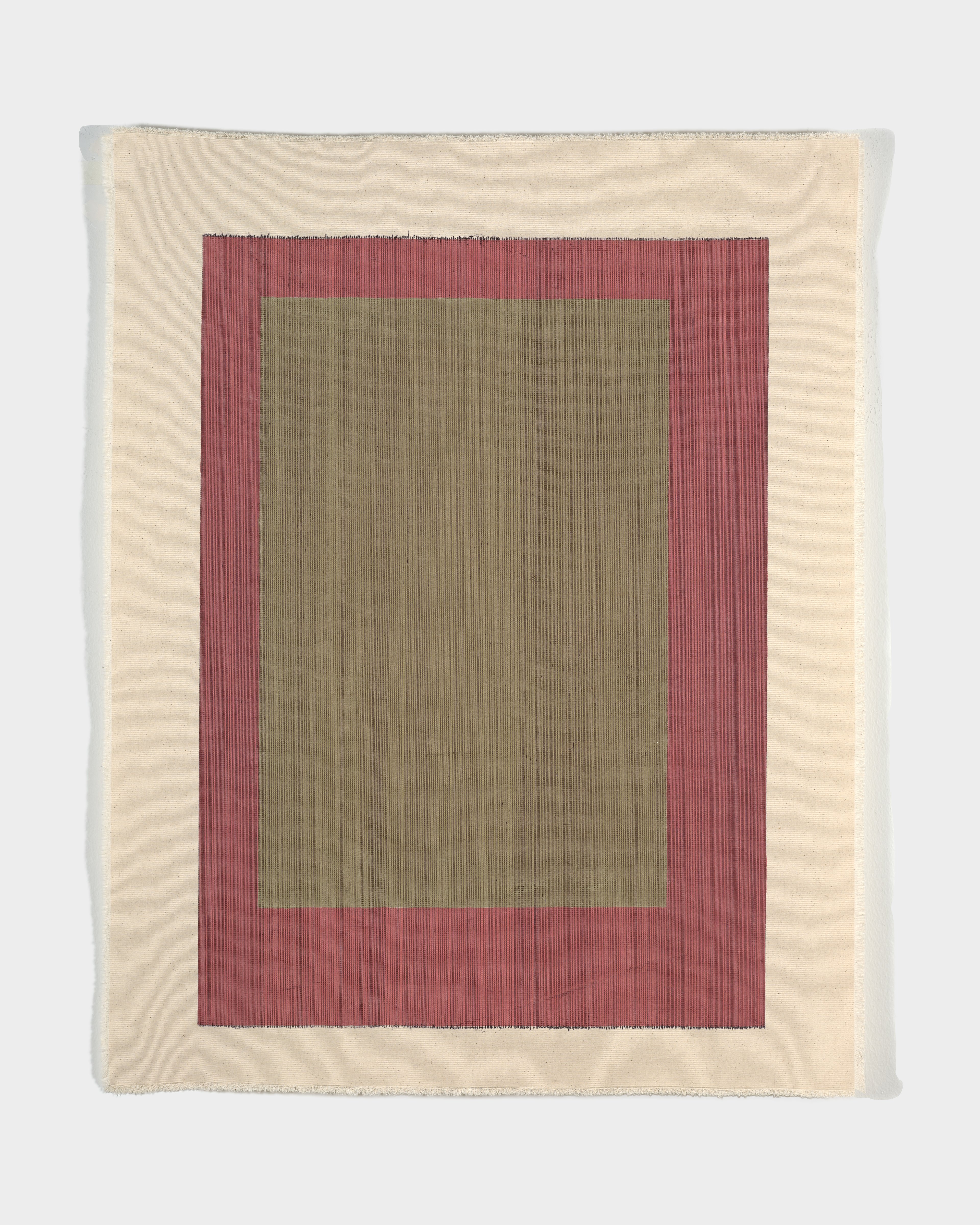
Defne Tesal
Door 5, 2025
Acrylic and pen on fabric
98.5 × 78 cm
38.8 × 30.7 in
£3,600
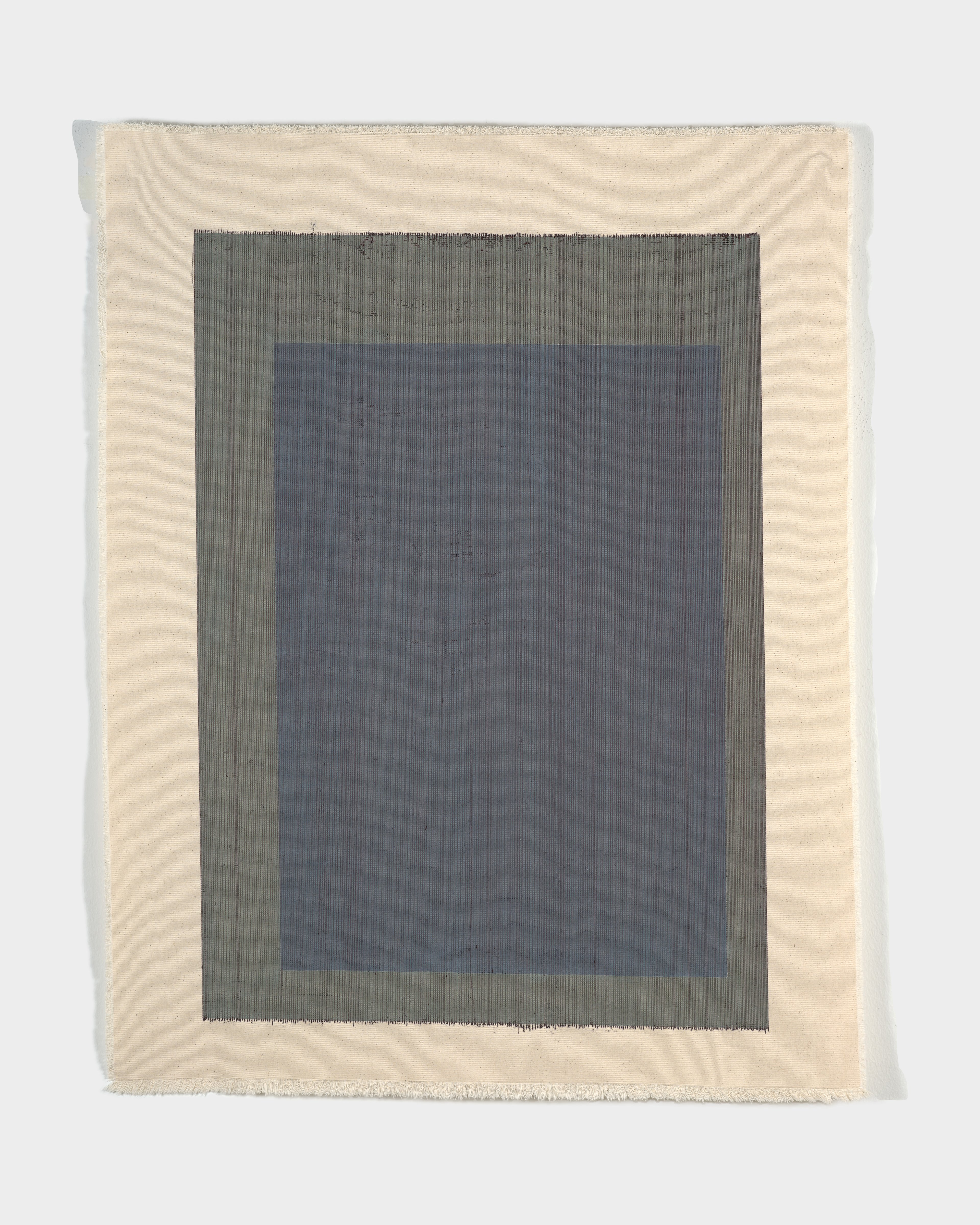
Defne Tesal
Door 6, 2025
Acrylic and pen on fabric
99 × 77.5 cm
39.0 × 30.5 in
£3,600